

Lövånger kyrkstad
Lövånger Church Town is one of the oldest preserved church towns in Sweden. Old maps show church cottages dating back to the mid-1600s. At that time, Lövånger Parish was one of the five major parishes in Västerbotten. The current church, Lövånger Church, is built of grey stone and was erected in the early 1500s.
Church towns became fairly common after the Protestant Church gained influence in Sweden, enforcing strict expectations of religious observance. Parishioners were expected to regularly attend church catechism classes, services, and religious holidays. In 1681, church attendance rules were introduced, requiring those living within 10 km to attend church every Sunday, and those within 20 km every other Sunday.
Because many parishioners lived far from the church, church towns were built with cottages, sheds, and stables. In the Lapland area, settlers and Sámi people gathered around chapels, also creating church towns with goahti (traditional Sámi huts) and church cottages.
Until the late 1800s, church towns were important meeting places. Markets, court sessions, and tax collections were held there. Church towns also held significant social value—public announcements were read from the pulpit, and people gathered on the church grounds to exchange news, form relationships, and find employment.
A fire in the 1870s destroyed 25 cottages. After the fire, several cottages were joined into a long building with 16 apartments, later converted into a parish hall.
In the early 1900s, church cottages fell into disuse and maintenance declined. Thanks to a forward-thinking county architect, who consulted with the National Heritage Board and the Nordic Museum, restoration efforts were initiated. The goal was to preserve the area's characteristic layout and appearance. Although over 100 stables had to be demolished due to fire risk, 27 still remain.
Of the 47 church towns that once existed, only 16 remain today. These church towns likely date back to the same era as the medieval churches and can still be found in places like Umeå, Bygdeå, Lövånger, Skellefteå, Piteå, and Gammelstad.
Stay overnight in Lövånger Church Town
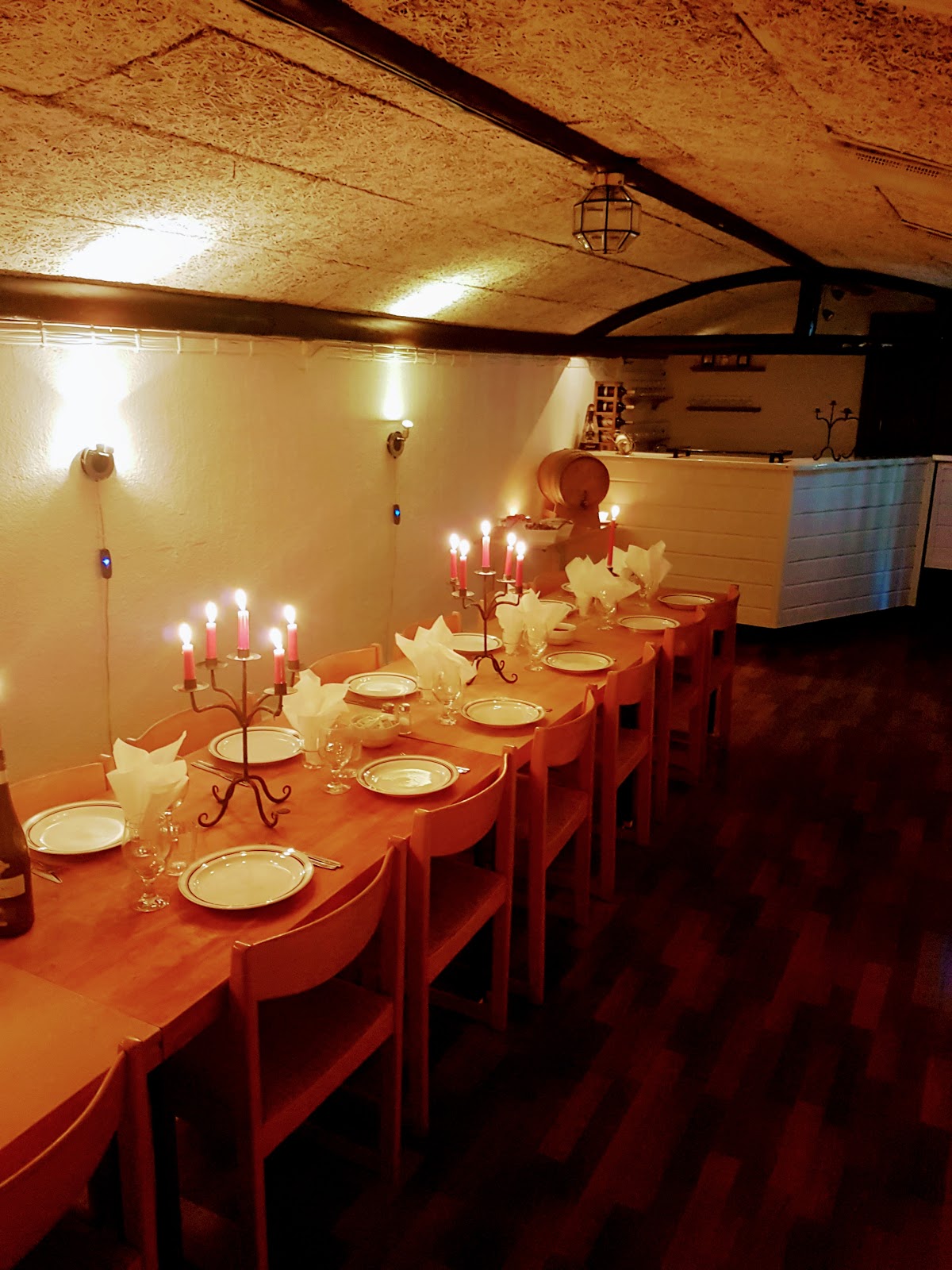
Lövånger Church Town is one of the few church towns where you can still stay overnight in a church cottage, as many are now used for cottage rentals.
This unique accommodation attracts curious tourists, devoted Västerbotten locals, conference guests, and wedding parties. In the 1950s, Lövånger’s local heritage association, together with the municipality and county administrative board, began restoration efforts that continue today. All cottages have been renovated to a high standard while retaining their historic charm. All cottages include showers and toilets, and most have a small kitchenette. Each cottage is unique, with options ranging from small one-bed cottages to larger five-bed ones.
There are 117 church cottages in total, as well as numerous stables. Most of the cottages and stables are owned by Lövånger’s heritage association, although a few are privately owned. The rental operation is managed by Lövångergården.